


Repurposing content is one of the smartest strategies bloggers can use today. In this guide, I’ll show you exactly how to repurpose blog content for multiple platforms like Twitter, Instagram, TikTok, Pinterest, LinkedIn, YouTube Shorts, and email.
Hey everyone, Perfect Lusa here! Today I want to share something that’s completely changed the way I handle content for my blog and social media. If you’ve ever spent hours writing a blog post, only to see it get a handful of views, you know the frustration. I’ve been there. But over time, I learned how to repurpose a single blog post across multiple platforms Twitter, Instagram, TikTok, Pinterest, YouTube Shorts, LinkedIn, even email without losing my mind or my time.
So in this post, I’m going to walk you through my step-by-step workflow, tips for saving time, and some practical Tanzanian examples to help you maximize your reach. Whether you’re just starting or already blogging, this is going to change your content game.
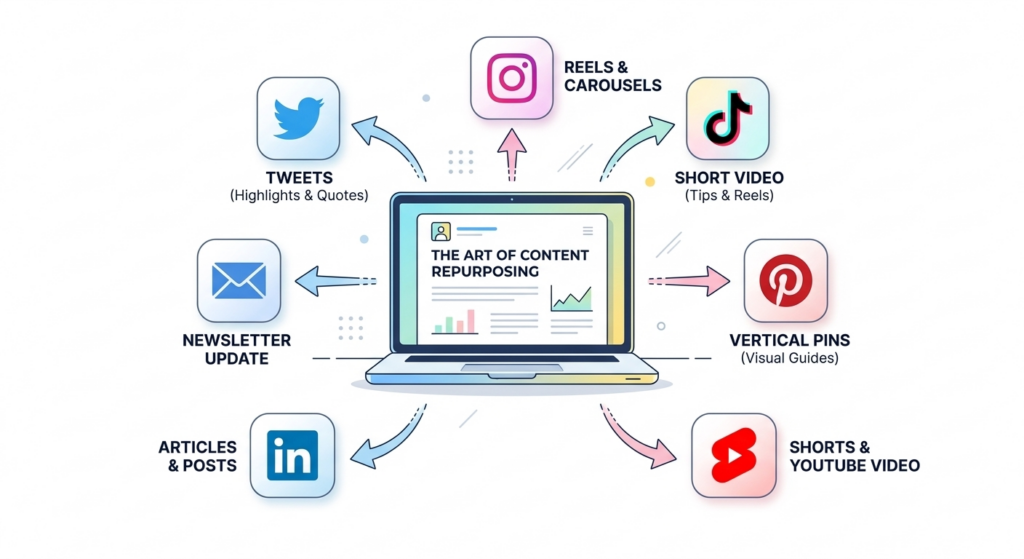
Why Repurposing Content Is a Game-Changer
Before I dive into the “how,” let’s talk about the why. I used to think writing a blog post was enough. I’d spend hours creating something valuable and then… post it on my website, and wait. That’s it.
But here’s the reality: people consume content differently. Some scroll Twitter during their chai break in Dar es Salaam, others watch TikToks on the bus to Ubungo, and some check LinkedIn while at work in Arusha. If your content isn’t everywhere your audience is, it’s likely being ignored.
Repurposing helps you:
- Reach more people – same content, multiple platforms.
- Save time – don’t reinvent the wheel every time.
- Build authority – consistent presence on social media builds trust.
- Boost SEO and traffic – multiple touchpoints bring readers back to your blog.
I started with just one blog post per week. By repurposing, I’m now creating 10+ pieces of content per week without writing anything extra from scratch.
Step 1: Choose the Right Blog Post
Not every post deserves to be repurposed. I usually pick content that is:
- Evergreen or semi-evergreen (stuff that won’t get outdated next week).
- High value (answers common questions or solves problems).
- Easily chunkable into smaller bits (listicles, tips, tutorials).
Example from Tanzania: I wrote a post on “How to Start Poultry Farming in Tanzania” for my site Nasipect. This post was perfect because I could easily make smaller pieces like:
- “3 Tips for Beginner Poultry Farmers” for Twitter.
- “Top 5 Mistakes Tanzanian Farmers Make” for Instagram carousel.
- A TikTok showing the chicken coop setup step by step.
Step 2: Break Down Your Blog Post into Chunks
Once I pick a post, I don’t just throw it on social media. I break it into digestible pieces.
Here’s my process:
- Highlight key points – bullet points, tips, or stats.
- Identify quotes or insights – sentences that can stand alone.
- Look for visual opportunities – charts, diagrams, or photos I can repurpose.
Example: From my poultry farming post:
- Key tip: “Always start with a small flock before scaling up.”
- Quote: “The biggest mistake is underestimating feed costs.”
- Visual: Photo of a well-built chicken coop in Dar es Salaam.
Now I have several pieces of content ready for different platforms.
Step 3: Repurposing for Each Platform
Here’s how I approach each platform individually.
3.1 Twitter (X)
Twitter is great for short, snappy tips and threads.
- Single tweet: Share one tip or statistic.
- Example: “Did you know? Starting with a small flock can save Tanzanian farmers thousands in feed costs. #PoultryTips”
- Thread: Break your blog post into 5–10 tweets, each sharing a key insight. End with a link to your blog post.
- Tip: Keep it conversational. I often write like I’m explaining to a friend in Mikocheni or Masaki.
Pro Tip: Use local hashtags like #TanzaniaBusiness, #SideHustleTz, #DarEsSalaam to reach the right audience.
3.2 Instagram
Instagram is all about visual content. I usually use two formats:
- Carousels – multiple images/slides.
- Each slide: One tip, quote, or stat from the blog.
- Example: For my poultry post:
- Slide 1: Title – “Top 5 Mistakes Tanzanian Poultry Farmers Make”
- Slide 2–6: Each mistake with a photo of a chicken coop or feeding process
- CTA on last slide: “Read the full guide on nasipect.com”
- Reels – short videos.
- Example: Show a quick DIY for building a chicken coop in 30 seconds.
- Tip: Add captions because many people watch without sound.
3.3 TikTok
TikTok is a goldmine for local, relatable content.
- Turn blog tips into short 15–60 second videos.
- Show real-life examples: “Here’s how I built my chicken coop in Dar es Salaam for under TSh 300,000.”
- Use trending sounds, local slangs, and quick cuts.
- CTA: “Want the full guide? Check my blog!”
Pro Tip: I always film on my phone in natural light. People trust real visuals over staged content.
3.4 Pinterest
Pinterest is often overlooked but amazing for evergreen traffic.
- Turn key points into infographics or pin images.
- Example: Step-by-step guide: “How to Start Poultry Farming in Tanzania.”
- Include a link back to your blog post.
- Tip: Vertical images (1000×1500 px) work best.
Pinterest is a search-based platform, so your content keeps bringing traffic months after posting.
3.5 YouTube Shorts
YouTube Shorts are perfect for quick tutorials or insights.
- Repurpose a tip or small section from your blog.
- Example: “Quick Tip for Tanzanian Farmers: Always calculate feed costs before buying chicks.”
- Keep it under 60 seconds, add captions, and link your full blog in the description.
3.6 LinkedIn
LinkedIn works for professional insights and thought leadership.
- Share blog summaries or lessons in your niche.
- Use a mix of text posts, images, and articles.
- Example: “Starting a poultry business in Tanzania taught me three key lessons about managing costs…”
- Add local context, like how regulations or markets in Tanzania affect the business.
3.7 Email
Email is still one of the highest ROI platforms.
- Turn your blog into a newsletter.
- Example workflow:
- Pick 3–5 main points from the post.
- Add a personal story or local context.
- Include a CTA: “Read the full post here” with a link.
Pro Tip: Keep it short, conversational, and mobile friendly most Tanzanians check email on their phones.
Step 4: Create a Content Calendar
Once I know what platforms I’ll post on, I plan the schedule.
- Monday: Blog post goes live.
- Tuesday: Twitter thread + Instagram carousel.
- Wednesday: TikTok + Pinterest pin.
- Thursday: LinkedIn post.
- Friday: YouTube Shorts.
- Saturday: Email newsletter.
This way, one blog post fuels content for a whole week.
I personally use Google Sheets to track everything:
- Column A: Blog title
- Column B: Platform
- Column C: Content type (thread, reel, pin)
- Column D: Scheduled date
- Column E: Status
Step 5: Tools That Save Time
I don’t do everything manually. Here’s what I use:
- Canva – For Instagram, Pinterest, and thumbnails.
- CapCut – For TikTok and YouTube Shorts edits.
- Buffer / Hootsuite / Metricool – Schedule posts across platforms.
- ChatGPT – Generate captions, hashtags, or repurpose text.
- Google Sheets – Plan and track everything.
Step 6: Cross-Link and Drive Traffic
Repurposing isn’t just posting everywhere—it’s strategically linking back.
- Add blog links in TikTok or Instagram bio.
- Use “Read more” CTAs in LinkedIn and Twitter threads.
- Encourage email subscribers to check your blog for full details.
Example: On TikTok, I might say: “This is just one step. Check my blog for the full poultry farming guide in Tanzania!”
Step 7: Measure and Optimize
After posting, I check:
- Engagement: Likes, comments, shares.
- Click-through: How many people visited the blog from each platform.
- Conversions: Newsletter signups or product inquiries.
Based on this, I adjust:
- Timing: When my Tanzanian audience is most active.
- Format: What content resonates more (Reels vs. Carousels).
- Messaging: Which tips get more shares or saves.
Tips for Saving Time
Here’s what I’ve learned from running multiple channels:
- Batch content creation – Write one blog post, then create all social content in one go.
- Reuse visuals – Don’t recreate the same image for Instagram, Pinterest, and LinkedIn. Resize and tweak.
- Use templates – Canva templates are a lifesaver.
- Repurpose text – A blog paragraph can become 5 tweets, an email snippet, and a LinkedIn post.
- Track what works – Double down on formats that get more reach.
Local Examples That Work
- Twitter – Threads about “How Tanzanian side hustlers can start small businesses.”
- Instagram Reels – Quick “Day in the life of a Dar es Salaam entrepreneur” videos.
- TikTok – Step-by-step tutorials using everyday items from Kariakoo or Mbezi markets.
- Pinterest – Visual guides for local recipes, DIY home hacks, or farming tips.
- LinkedIn – Lessons learned from running a small business in Tanzania.
- Email – Personal stories with actionable steps for Tanzanian readers.
By using local context, your content becomes relatable, shareable, and valuable.
Step 8: My Step-by-Step Workflow Recap
Here’s the complete workflow in one place:
- Choose the right blog post – evergreen, valuable, chunkable.
- Break it into pieces – key points, quotes, visuals.
- Repurpose for each platform – Twitter, Instagram, TikTok, Pinterest, YouTube Shorts, LinkedIn, Email.
- Create a content calendar – plan posting schedule.
- Use tools – Canva, CapCut, scheduling tools, ChatGPT.
- Cross-link strategically – drive traffic back to your blog.
- Measure and optimize – track engagement and conversions.
- Save time – batch creation, templates, repurpose text and visuals.
Common Mistakes to Avoid
- Posting the same content in the same format everywhere. Mix it up.
- Ignoring analytics—if a platform isn’t working, change strategy.
- Forgetting local context—Tanzanian examples make your content relatable.
- Not including CTAs—always guide your audience to your blog, email, or product.
Final Thoughts
Repurposing content isn’t just a hack; it’s a strategy that multiplies your reach without multiplying your work.
I’ve gone from writing one blog post a week and seeing minimal traffic to using the same post to fuel Twitter threads, Instagram carousels, TikToks, Pinterest pins, LinkedIn posts, YouTube Shorts, and emails. And yes, it’s doable even if you’re in Tanzania, starting small, and learning as you go.
The key is consistency, planning, and local relevance.
So, if you want to maximize your blog’s reach, start repurposing today. Pick your next post, break it down, and take action. You don’t need a huge team—just the right process.
Call to Action
If you found this guide helpful, don’t just leave it here—take action!
- Pick a blog post you’ve written recently.
- Break it into chunks for at least 3 platforms.
- Schedule posts this week.
And if you want more step-by-step Tanzanian examples and templates for repurposing content, subscribe to my newsletter at Perfect Lusa and join our growing community of local creators.
Trust me, once you start repurposing, you’ll see your reach, engagement, and traffic grow faster than ever before.